
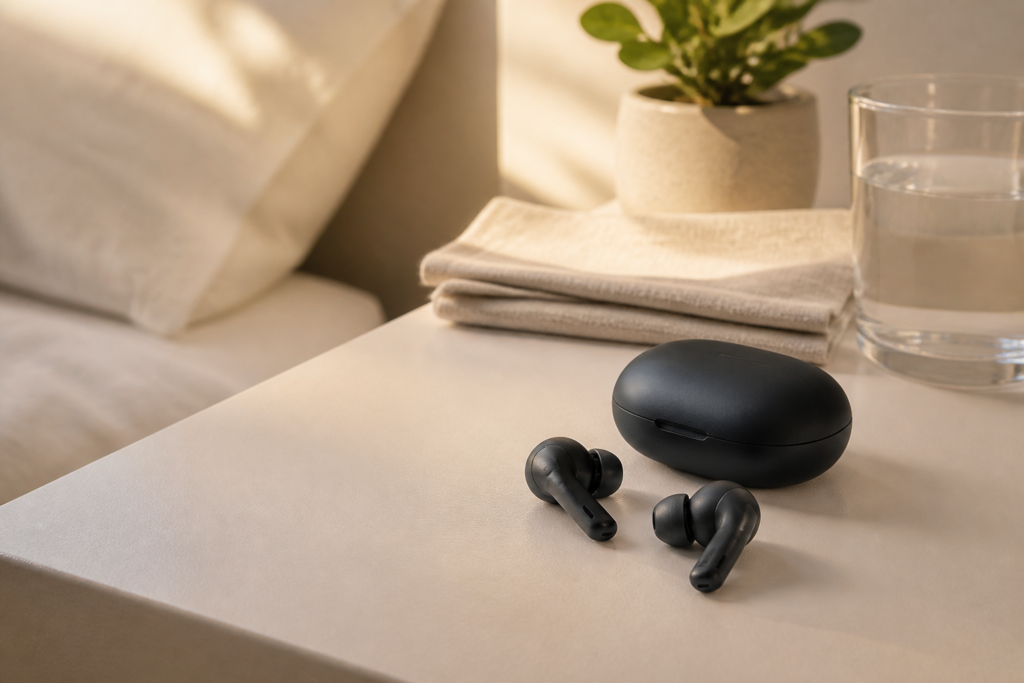
Wireless earbuds are attractive retail products because they are compact and easy to bundle, but the buying decision should go beyond appearance. A dependable assortment starts with consistent pairing, charging-case handling, packaging, and a clear customer-use scenario.
Define the customer scenario
Decide whether the assortment is aimed at commuting, calls, casual listening, sport, or gifting. The scenario guides the way you evaluate the case size, fit options, controls, microphone behavior, and packaging. It also helps the product page explain the item without making unsupported promises.
Test the complete set
Test both earbuds together and separately. Check charging contact, case closure, pairing behavior, playback controls, and the microphone in a quiet environment. If the product includes touch controls, repeat the actions several times so you can identify inconsistent response before stocking it.
Review the charging case
The case is part of the customer experience and part of the shipping risk. Check hinge movement, lid alignment, charging port condition, and whether the earbuds sit securely in their wells. Inspect the case surface for marks after sample handling and confirm that the packaging protects the set from pressure.
Keep product claims precise
Terms such as noise cancelling, long battery life, waterproof, or low latency should only appear when they are supported by documented product information. A clean product page can still convert with accurate language focused on use, comfort, storage, and everyday convenience.
Plan replenishment
Record the sample version, packaging format, color, and supplier reference. Keep a retained sample when possible so later batches can be compared against the approved version. This is especially useful when several visually similar earbud sets are sold under one category.
Wireless earbuds perform best as a retail category when the assortment is built around a clear use case and supported by a repeatable test and replenishment process.