
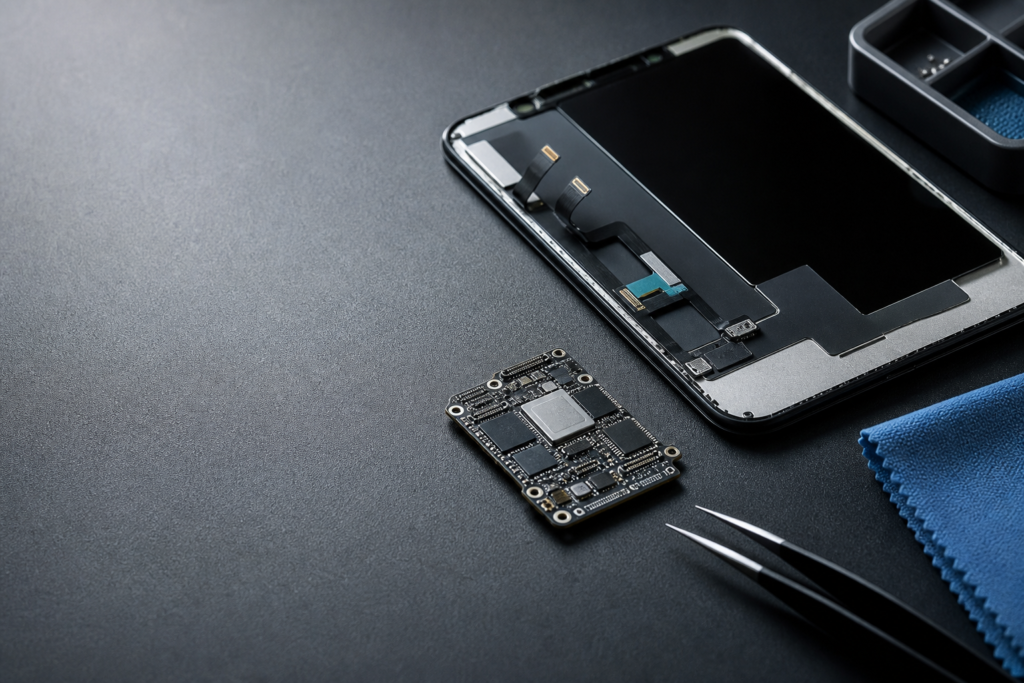
AI-focused phones are selling on software promises, but repair professionals should watch the hardware they carry: larger displays, denser internals, and tighter thermal designs change what breaks and how it is repaired.
Bigger displays, bigger exposure
AI features encourage larger screens and more time on-device. Larger displays mean more surface area exposed to drops, more edge glass, and more expensive assemblies. Repair demand concentrates on a smaller number of high-value models, which is good news for shops that stock deep, not wide.
Thermal design adds repair variables
AI workloads generate heat, so new devices use more elaborate thermal layouts. Technicians need to understand how heat spreaders, brackets, and adhesive stacks are arranged before touching the display. This makes pre-installation inspection more valuable than ever.
Calibration is part of the job
Newer devices increasingly expect display-related pairing or calibration steps after replacement. Shops that document and follow manufacturer-recommended procedures will produce more consistent repairs, while those that skip verification will see more follow-up visits.
What repair buyers should stock
- High-demand flagship display assemblies with documented calibration notes.
- Adhesive and frame kits that match newer thermal layouts.
- Test plans that include brightness, touch, and sensor verification.
The AI phone cycle will not eliminate repair demand. It will concentrate it, professionalize it, and reward shops that treat every replacement as a documented process rather than a swap.
 Contact us to share more insights together