
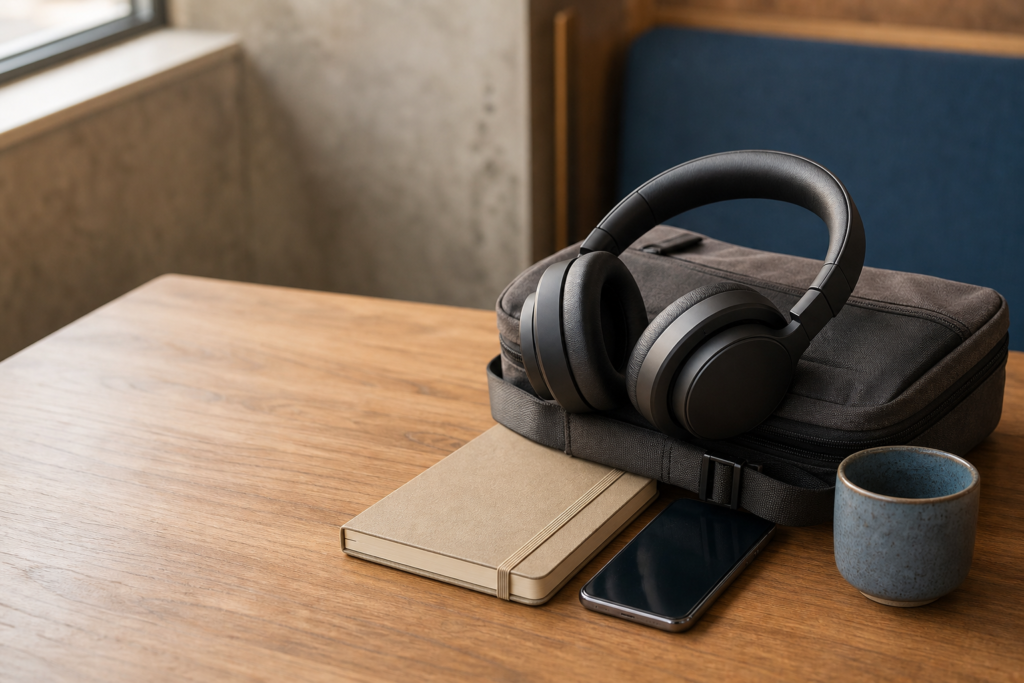
Over-ear headphones can support focused work, travel, and everyday listening, but the best choice depends on how the user will carry and wear them. Buyers should compare the physical experience and the operating details rather than choosing from appearance alone.
Start with wearing time
For long sessions, pay attention to earcup depth, headband pressure, cushion feel, and overall weight distribution. A product that feels comfortable for a short sample may feel different after a longer listening session, so include a practical wear test when possible.
Consider the travel routine
Foldable construction, hinge movement, cable storage, and case compatibility matter to commuters and travelers. Check that moving parts operate smoothly and that the folded shape can be stored without pressing hard against the earcups.
Check controls and calls
Test the physical or touch controls repeatedly and confirm that the user can identify volume, playback, and call functions without confusion. For work use, test microphone behavior in a quiet setting and describe the result carefully without promising performance in every environment.
Review the product presentation
Clear packaging and a concise product page help customers understand what is included. State whether a cable, case, or adapter is supplied only when that information is confirmed. Avoid adding a feature to the title simply because it is common in the category.
A good over-ear headphone assortment is built around real routines: how long the customer wears it, how it travels, how controls work, and how the complete set is stored.