
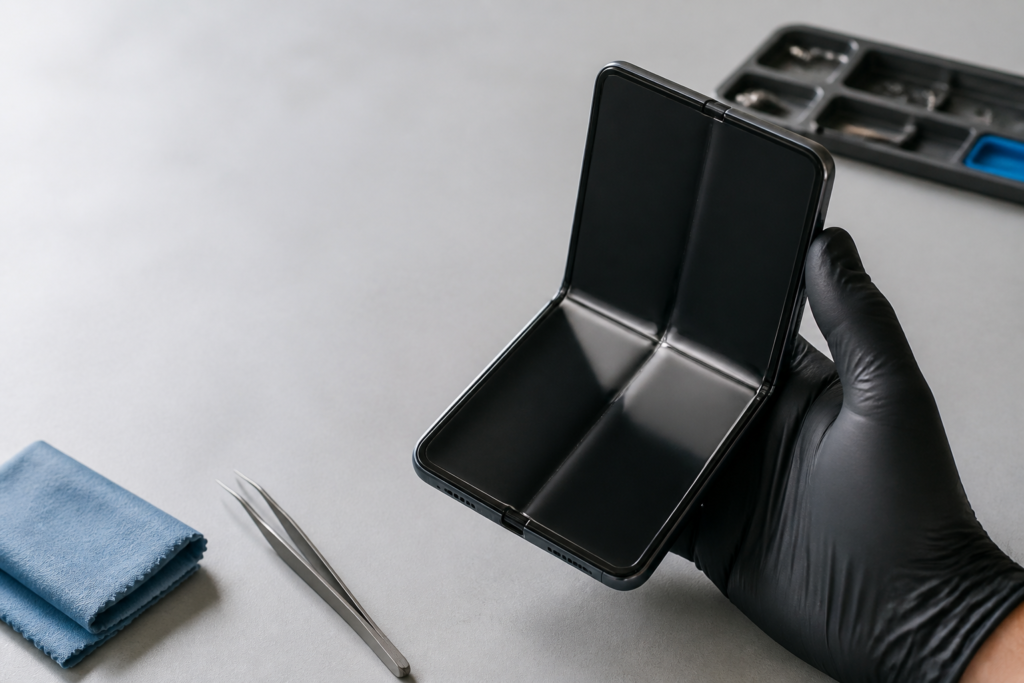
Hinge failure is the famous problem of folding phones, but the harder repair work is happening across the display itself. Foldables ask technicians to develop skills that flat-screen repair never required.
The crease is a design point, not a defect
A foldable display is engineered to bend, and the crease area endures stress with every open and close. Replacement panels must be matched not only to the model but to the hinge architecture. Buyers should verify that a replacement display is designed for the specific fold pattern of the device.
Adhesive architecture is more complex
Foldable assemblies use layered adhesive and tension systems that keep the display stable through hundreds of thousands of bends. Rushing the replacement process, or skipping alignment steps, can create visible defects after a few days. Documentation and patience are part of the skill now.
Calibration is non-negotiable
After replacing a foldable display, sensors and calibration routines often need to be re-run. A repair that looks finished but skips calibration can return as a customer complaint. Shops should build calibration into the standard foldable workflow, not treat it as optional.
What foldable repair really requires
- Model-specific displays matched to hinge architecture.
- Layered adhesive and alignment kits.
- A documented calibration and test sequence.
- Technician training before opening the first device.
Foldables will keep growing, and with them a repair category that rewards preparation over improvisation. Shops that invest in the workflow now will own the market before it becomes crowded.
 Contact us to share more insights together