
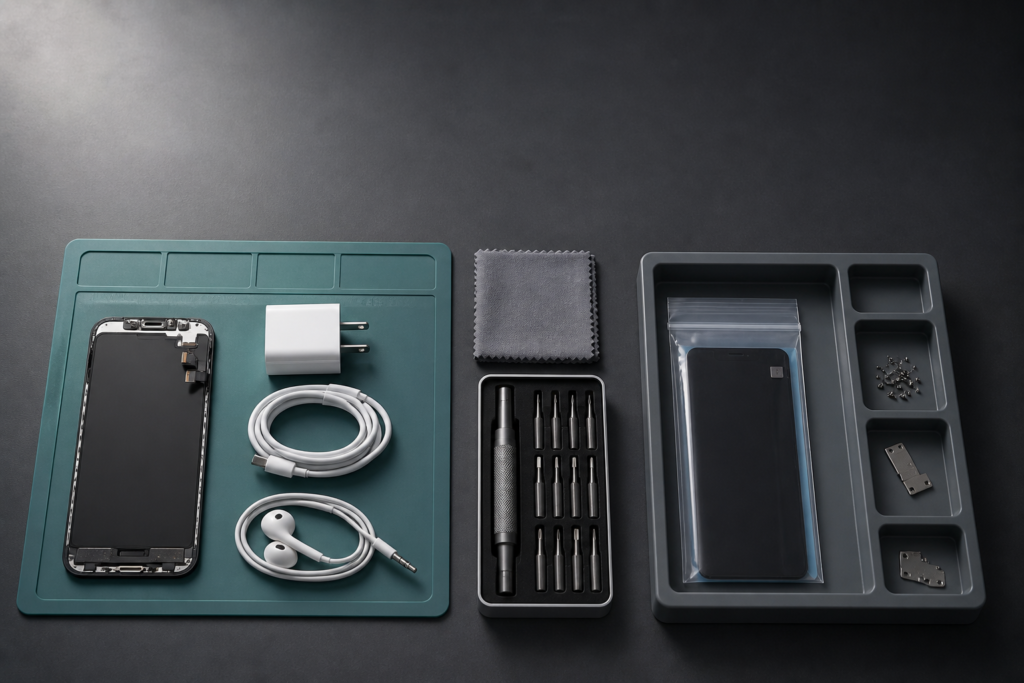
Phone accessory sourcing becomes easier when every order follows the same sequence. Instead of comparing products only by price, buyers can move from requirement definition to sample review, receiving checks, and documented replenishment.
1. Write the requirement before requesting a quote
List the product family, exact model or use case, required assembly type, destination market, expected order quantity, packaging needs, and target delivery window. A structured request gives suppliers enough context to quote comparable items.
2. Approve a sample against a checklist
Use the same checklist for every sample. For screens, review fit, display, touch, connector, and packaging. For charging accessories, review connector condition, adapter format, and cable handling. For audio products, review pairing, charging, controls, and the complete set. Keep the checklist specific and avoid vague quality language.
3. Document the approved version
Save the supplier reference, product photos, confirmed description, packaging format, and any agreed inspection points. This becomes the reference for the next order. If a change is acceptable, record it explicitly rather than allowing an unplanned substitution.
4. Receive and compare
Inspect the carton, verify item references, sample the shipment, and compare the result with the approved record. Separate exceptions immediately and keep photographs for supplier communication.
5. Reorder with the same language
Use the approved reference and checklist in the reorder request. Ask the supplier to confirm whether the version, packaging, and inspection process remain unchanged. This reduces confusion when a catalogue contains several similar models.
Reliable sourcing is a system, not a single purchase. A clear requirement, documented sample approval, consistent receiving check, and disciplined reorder note will make phone accessory supply easier to manage as the business grows.