
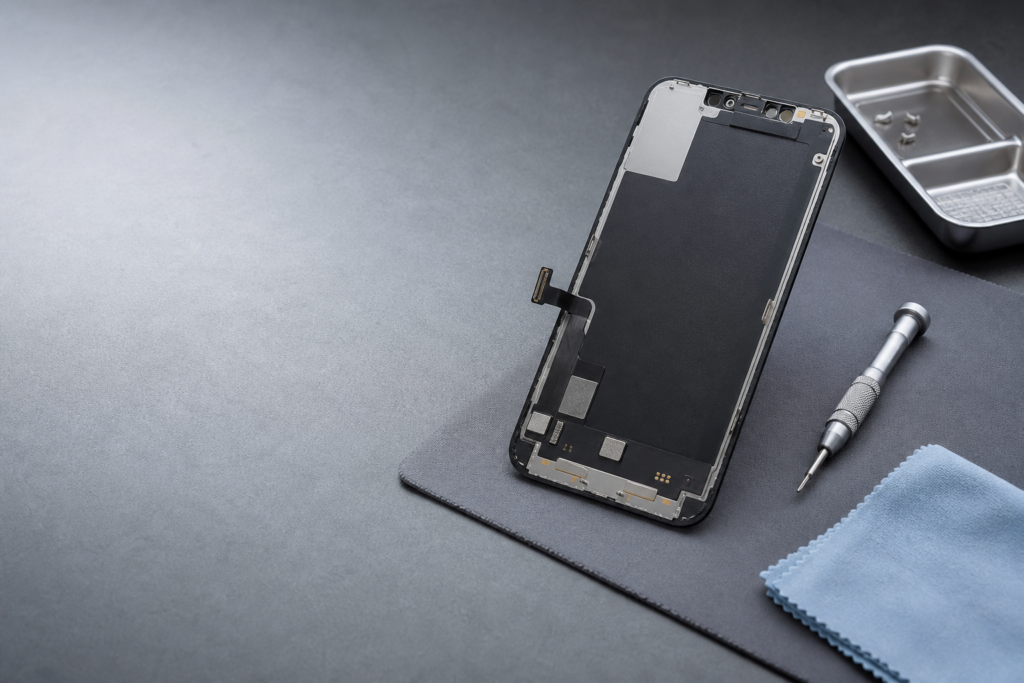
Choosing a replacement phone screen is not simply a matter of matching a product photo. A reliable repair workflow starts with the exact device model, the type of display assembly required, and the quality checks that will be completed before installation. For repair shops and wholesale buyers, a clear checklist reduces returns and protects technician time.
Start with the exact model and assembly type
Record the complete model identifier before placing an order. Similar-looking phones can use different connectors, frame dimensions, camera openings, or touch-panel layouts. Also confirm whether the job needs a bare display, a digitizer, or a complete display assembly. A complete assembly can simplify installation, while a bare panel may suit a technician who already has the required frame and tools.
Clarify the quality level
Ask the supplier how the screen is graded and what inspection is performed before dispatch. Useful questions cover dead pixels, touch response, brightness consistency, frame alignment, connector condition, and protective packaging. Avoid relying on vague phrases such as premium or original quality without asking what those terms mean in the seller’s own inspection process.
Check compatibility before installation
Before applying adhesive or closing the device, connect the replacement screen and test the main functions. Check the image, touch response across the full surface, proximity-sensor area, front-camera opening, and any visible flex cable. A short pre-installation test is much less expensive than reopening a fully assembled phone.
Build a repeatable receiving process
For wholesale orders, record the model, quantity received, carton condition, and test result. Keep a small sample from each shipment for reference and photograph any issue before contacting the supplier. This creates a useful evidence trail and helps distinguish a shipping problem from an installation problem.
Final checklist
- Confirm the exact model identifier.
- Choose the correct display or assembly format.
- Define the supplier’s grading and inspection language.
- Test before final installation.
- Document incoming stock and exceptions.
A careful selection process makes replacement screens easier to install, easier to reorder, and easier to support after the sale.